

Experience is supposed to teach us life lessons. We mess up. We make wrong choices. Wisdom eventually comes when we learn from those experiences. We have been down this road before and want things to turn out differently. The hope is that when confronted with something similar in the future, we choose wiser.
As we age, we inevitably learn loss, heartbreak and how to cope with the randomness of life.
The best of us die young. Good couples can’t get pregnant. We outlive our pets. Our hair turns gray or falls out. We get cut from the team. Our bodies change forever after childbirth. Our parents die. We lose our jobs. We didn’t get into that school. Our parents got divorced. Our kids are insane. We spend years saving for retirement and watch it evaporate. Our generation is completely ignored.
We are powerless. Father Time is undefeated. We hope that with enough age, experience and wisdom we'll be able to ride the random waves of life and figure something out.
But maybe we don’t have to wait. Maybe there’s a life hack staring us in the face that gives us more insight with less experience from a group that is historically dismissed and marginalized:
Teenage girls.
Specifically, singer-song-writers whose ability to write, emote and create with a profundity and wisdom beyond their years.
Olivia Rodrigo was 17 when she released the album, Sour, which was a sensation. She won Grammys for best new artist, best pop vocal album and best pop solo performance for the smash hit, Drivers License, which also set the Spotify record for most streams in a single day when it debuted.
Her Grammy wins show her critical acclaim but the awards are as flawed as they are important. For example, in 2014, Macklemore’s The Heist beat Kendrick Lamar’s good kid m.A.A.d. city and in hindsight (in the moment actually) this seems laughably egregious.
Awards and streaming records aside, the album is really good. Her writing is profound. Her lyrics are memorable and her emotions are relatable across generations. She is a 17 year-old-girl and not only understands the human condition better than most but can articulate it.
The first line of the first track (Brutal) nails teenage angst: “I’m so insecure, I think.” It’s those two words, “I think.” It’s a throwaway. A joke. But it hits. And we’re off. It says this is going to be raw, funny, self-revealing, honest and of course, brutal. Let’s go.
Insecurity is universal. It is why many of us do anything. Rockstars want to see thousands of fans losing their minds because they are insecure. Politicians ask us to vote for them because they are insecure. These insecurities drive people to think that if they get enough praise, maybe they will feel more secure (spoiler alert: they won’t).
Before the eyerolls start about what a 17-year-old-girl can teach the masses, Rodrigo declares, “I'm so sick of 17” and asks, “Where's my fucking teenage dream?” Ageism works both ways. Don’t assume that because she was a child actor and landed a role on a Disney+ spinoff of High School Musical, she had it all.
Rodrigo continues, “If someone tells me one more time ‘Enjoy your youth,’ I'm gonna cry.” She feels dismissed. We all do at some point. Kids have no agency over anything except what food they will (and mostly won’t) eat. It’s the same for older people. We can prolong life through assisted living, but that’s it. Living. Survival. The quality of life is not secondary or even tertiary. It’s irrelevant.
Conventional wisdom is that teenagers, like Rodrigo, know enough to be dangerous but not enough to be responsible. And those preconceptions are even worse for teenage girls.
Women are historically dismissed. According to the Harvard Business Review, “there are more CEOs of large U.S. companies who are named David (4.5%) than there are CEOs who are women (4.1%) — and David isn’t even the most common first name among CEOs. (That would be John, at 5.3%.)” There has never been a female president. All white (except for one) men whose average age at inauguration is 55 years old. This is arguably the most important job in the world and if you are a teenage girl, the statistics tell you that you are unimportant.
Society categorizes teenagers as moody, but that’s not true - everybody is moody. Ride a subway. Go to Starbucks. Look around and you’ll find yourself surrounded by people looking miserable.
Rodrigo is able to turn her moodiness into incredible art that spans the relationship spectrum. In Traitor, she laments that her ex didn’t cheat but checked out a bit early and started a new relationship shockingly quickly with someone he insisted was a friend. In Favorite Crime, Rodrigo is the other woman. She expresses the complicated mixed feelings that come with being a secret lover.
This range of emotion underscores that Sour is not a breakup album. It’s a human experience album. Even the title references a sensation that causes both pain and pleasure - just like youth.

However, Rodrigo is not the only teenage girl making comments on the human condition beyond her years. Billie Eilish was 13-years-old when she uploaded Ocean Eyes to Soundcloud. She was 17 when she released When We All Fall Asleep, Where Do We Go? which won three Grammys including album of the year.
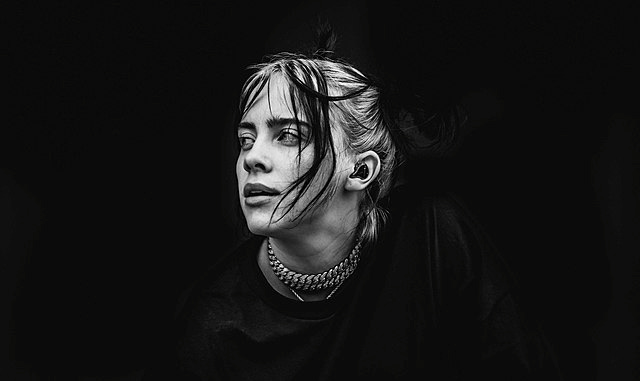
Eilish is a vibe. Standing at just 5’3” she is an absolute powerhouse. From her voice to her beats to her esthetics, which give off a cool, emo feeling. She is unafraid, goofy and connects with people, not just teenagers. She famously grew up in a small house in Los Angeles and writes all her songs with her older brother, Finneas, but make no mistake, she wanted to be great and was willing to work for it. The siblings have the phrase “10,000 hours” on the wall of their childhood bedroom. This references an idea from Malcolm Gladwell’s book, Outliers, that essentially states in order to be great at something you have to put in 10,000 hours of work.
Both Eilish and Rodrigo oscillate their vocals depending on the song’s mood and are not afraid to take things low and slow to a literal whisper. It’s like they are under the covers and don’t want their parents to hear. The small voice shows something else: strength. They have the strength to say that they aren’t alright.
Eilish goes so far as to say that if “[she] got everything [she] wanted…it [might be] a nightmare.” She needs the angst. It fuels her art and provides her identity as a person. She’s the bad guy.
That underdog mentality is pervasive among teenage girls. They feel like they are at the bottom of society. When you’re at the bottom you have nothing to lose. Nobody sees you. Nobody hears you. You are so desperate to be heard that the resulting expression is pure.
We saw this when Lorde (Ella Marija Lani Yelich-O'Connor) released Pure Heroine at the age of 16 in 2013. That album was a phenomenon and paved the way for teenage girls, like Rodrigo and Eilish, to say enough is enough. Lorde was not blonde. She did not dance conventionally. She wrote profound lyrics on top of insane beats. She told the status quo that she was “over [being] told to throw [her] hands up in the air.” She was done. The music video for her song, Tennis Court is literally a shot of her staring at the camera, pale-faced, dressed in black for three minutes and 21 seconds. She mouths the word “yeah” 18 times. That’s it. That’s the video.
These girls are unabashedly authentic, and that’s what draws people to them. They are teenagers. They want to be taken seriously and left alone. They are everything you are. Now get out of my room.
 | A guest post by
|
I'm arguably not a musicophile but thoroughly enjoyed this piece. As a person who was once a teenage girl, who knows the angst and growing pains, this resonated.
Love this perspective on where wisdom truly comes from. Fascinating piece!!